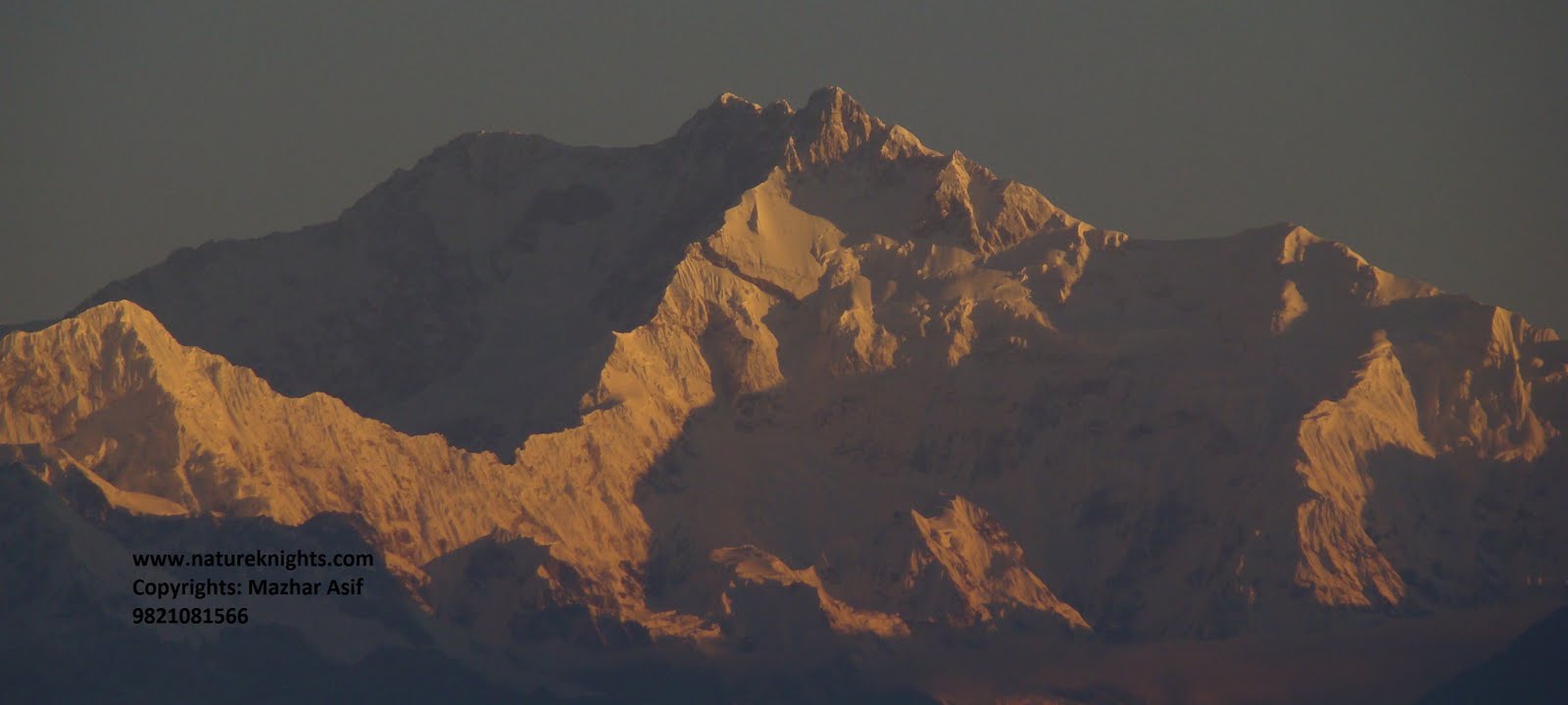
Nature Knights: Dzongri-Trek Sikkim: "Snow white Majestic Himalayan Peaks soaring over 20,000 feet plus Turquoise Coloured Lakes Jungles with Coniferous, Magnoleas, Rhodendrons, ..." read on
count down.. 3 more days to register..
Showing posts with label "Sikkim Trek". Show all posts
Tuesday, November 2, 2010
Nature Knights: Dzongri-Trek Sikkim
Monday, November 1, 2010
Dzongri-Trek Sikkim
Snow white Majestic Himalayan Peaks soaring over 20,000 feet plus
Turquoise Coloured Lakes
Jungles with Coniferous, Magnoleas, Rhodendrons, Orchids, Bright Coloured Birds..
Turquoise Coloured Lakes
Jungles with Coniferous, Magnoleas, Rhodendrons, Orchids, Bright Coloured Birds..
Has all the makings of Magical Life Time Experiences..
Yuksam - Sachin - Bakhim - Psoka - Phedang - Dzongri - Pelling..
Tentative planned schedule
Nov 19 (fri) Siliguri - Pelling (O/N pelling)
Nov 20 (sat) Pelling - Yuksom - Sachin
Nov 21 (sun) Sachin - Bakhim
Nov 22 (mon) Bakim - Phedang
Nov 23 (tue) Phedang - Dzongri
Nov 24 (wed) Dzongri (rest day)
Nov 25 (thu) Dzongri - Tsoka
Nov 26 (fri) Tsoka - Yuksom
Nov 26 (O/N stay at Yuksom)
Nov 27 share jeep ride to Siliguri
Altitudes:
Yuksam 1785 mts / 5854 ft)
Tsokha (3000 mts / 9840 ft)
Dzongri (4030 mts / 13218 ft)
Thangsing (3800 mts / 12464 ft)
Dzongri (4030 mts / 13218 ft)
Thangsing (3800 mts / 12464 ft)
Samiti Lake (4500 mts/ 14660 ft)
Goecha La (5002 mts / 16406 ft)
Eco-Adventure Trip
Booking close on November 6, 2010.
Includes:
Transport from Siliguri to Pelling (Return by Jeeps)
(Food during Siliguri to Pelling journey not included.)
Stay at Pelling 1 Nights (Stay and Food)
1 Night Stay at Yuksam (Stay and Food)
7 Days of Trekking (Food/Camping/Permits/Guide/Camping Cost included)
Standard food (Standard menu)..
Exclusions:
Anything not included in part of the program not included..
Fruit Juice, Airated Water, Bottled Water etc not include.
Non-Standard food item not include..
Un-utilised resources cost would not be refunded.
Any unplanned activity/stays and food at un-planned locations/ diversions due to act of Gods.. cost of the same is excluded..
Share jeep transport cost (NJP to Pelling on actuals).
About few of the places covered or places around this region.
About 35 km from Pemayangtse lays the first capital of Sikkim where the first Chogyal of the kingdom of Sikkim was consecrated in 1641 AD by three learned Lamas. The Norbugang Chorten nearby still has the evidence of the consecration ceremony in the form of stone seats and a footprint of the head lama on a stone.
The name `Yuksom` means the meeting place of three Lamas. Situated at an altitude of 1780 mt, the place is famous as the starting place for mountaineering expeditions and treks to higher Kanchenjunga ranges.
The famous Dubdi monastery is an hour's trek from Yuksom. For trekkers going towards the Kanchenjunga base camp or the Dzongri - Goechala region, this is the place where it all starts.
About 9 km from Yuksom is the 'phamrong' waterfall. A bridge nearby provides excellent glimpse of the waterfall.
Yuksom can be approached either from Tashiding or from Pelling. The road from Tashiding passes through dense forests.
Places of interest near pelling
Visit to Kechopali Lake, Monasteries near Pelling, Crown of first Chogyal King of Sikkim, Phuntsog Namgyal. (Places to be covered depends upto time available and energy level of the participants).
Tshoka is one of the ideal places to watch the sunrise over Mt. Pandim. Settlement is sparse but cultivation of various crops in summer is a common practice. This is your next night halt after Bakhim.
The trek trail gently follows uphill along the Rathong River gorge, through dense mixed jungle with magnolia, rhododendron, ferns and several varieties of orchids, brightly colored birds, and the occasional monkey. One hour trek should bring to a point where you cross the Paha Khola bridge, (1,733m./5,685ft.). There is a swimming spot by a waterfall for those who can dare the chill of cold water. Around couple of hour into trek you you can stop for a snack break by a bridge over stream. Passing by sweet smelling viburnum we cross the Prek Chu River and then ascend steeply for two or three hours to arrive at Bakhim. A little higher up is the picturesque Tibetan refugee settlement of Tshoka where we set up camp. This is a long trekking day and you should expect to be pretty tired by the time you arrive at the camp.
Dzongri is among the best trekking destinations not only in Sikkim but also in India. The Snow white peaks all around Dzongri are bound to keep you gazing with awe.The view from this place is like a paradise with patchwork of greens and gold streaked with blue - reminiscent of an abstract etching, framed by the majestic snowcapped peaks shining not very far away.
The awesome presence of the great mountains thrusting their snowy peaks deciphers the strength of the Tethys Sea bulging its muscles to reach this towering height. No less than 14 of them soar majestically to 20,000 ft. plus. The centre of attraction of course remain the Kanchenjunga.
Snowfall is common around Dzongri especially during the winter months. The trekker should be well prepared to face the cold. The temperature may go below freezing point any time around the year.
The trek to Dzongri is among the tougher ones in Sikkim. Even the experienced porters and guides get tired after reaching Dzongri. naturebeyond strongly recommend trekkers should go for regular fitness exercise for at least a month before coming for this trek.
Thangsing situated at the base of the Jopine peak at 3930m. Beautiful natural scenery can be seen all around.
Samiti Lake in Zemathang is beautifully enclosed on three sides by the Kanchanjunga, Pandim and Jopine peaks.
As you climb towards Goecha La Pass and pause to take a deep breadth, you can enjoy the colours of transparent turquoise of Lake Samiti- A glacial lake in the Onglathang valley. (A view from west Sikkim)
Considered holy by the Sikkimese, this lake is on route to Goechala pass at an altitude of 14000ft. The Sikkimese name for it is Sungmoteng. The inlet stream into the lake comes directly from Mt. Pandim which is right by its side. The outlet stream goes on the join the Prek Chu, which further joins the Rathong Chu to form the mighty Rangit river.
When the sun comes up, the lake really sparkles with its clear water. The myriad colors of the lake indicate either rocks on the bed or the depth of the bed itself. When it's cold, the surface of the lake freezes over. It had already freezed slightly at the edges forming a thin layer of transparent ice when I had reached there. You can also see the path of the inlet stream beneath the lake surface at the top left corner of the lake.
In Sikkim, the Goecha La trek takes the trekker up-close for a spectacular view of the mighty Kanchenjunga amidst a majestic panorama of the other lesser Himalayan giants within its range of mountains.
This is an extension of the Dzongri trek - and trekking beyond the meadows Dzongri is raw adventure at its best where the visitor is taken into the realm of towering mountain peaks directly above and camp is set amidst the view of rumbling avalanches and high mountain glaciers
Labels:
"Dzongri Trek",
"Dzongri",
"Sikkim Trek",
Bakim,
Phedang,
Tsoka
Saturday, October 16, 2010
The Place - Sikkim
The Last Shangri-La in Himalayas
Snow white Majestic Himalayan Peaks soaring over 20,000 feet plus
Turquoise Coloured Lakes
Jungles with Coniferous, Magnoleas, Rhodendrons, Orchids, Bright Coloured Birds..
Turquoise Coloured Lakes
Jungles with Coniferous, Magnoleas, Rhodendrons, Orchids, Bright Coloured Birds..
Mighty Waterfalls
Beautiful People, Festivals and Culture..
Has all the makings of Magical Life Time Experiences..
Click here for Sikkim Safari
Click here for Sikkim Trek
Has all the makings of Magical Life Time Experiences..
Click here for Sikkim Safari
Click here for Sikkim Trek
More about Sikkim..
Sikkim is a popular tourist destination for its culture, scenic beauty and biodiversity.
Sikkim is a landlocked Indian Stated nested in the Himalayas. It is the least populous state in India, and the second-smallest in area after Goa. The state borders Nepal n the west, Tibet Autonomous Region of China, to the north and east, and Bhutan in the southeast. The Indian state of West Bengal borders Sikkim to its south. The official Language of the state is English, but there is a sizable population that converses in Nepali. Nepali (the lingua franca of the state), Lepcha, Bhutia, and Limbu. It is the only state in India with an ethnic Nepalese majority. It is an ancient land also known as Indrakil, the garden of Indra, the king-god of heaven in Hindu religious texts. The predominant religions are Hinduism and Vajrayana Buddhism. Gangtok and is the capital and largest town.
Despite its tiny size, with an area of 2,745 square miles (7,110 square kilometer), Sikkim is geographically diverse, owing to its location on the Himalaya. The climate ranges from subtropical to high alpine, Kanchenjunga, the world's third highest peak, is located in the northwestern part of the state on the boundary with Nepal, and can be seen from most parts of the state.
Sikkim is a landlocked Indian Stated nested in the Himalayas. It is the least populous state in India, and the second-smallest in area after Goa. The state borders Nepal n the west, Tibet Autonomous Region of China, to the north and east, and Bhutan in the southeast. The Indian state of West Bengal borders Sikkim to its south. The official Language of the state is English, but there is a sizable population that converses in Nepali. Nepali (the lingua franca of the state), Lepcha, Bhutia, and Limbu. It is the only state in India with an ethnic Nepalese majority. It is an ancient land also known as Indrakil, the garden of Indra, the king-god of heaven in Hindu religious texts. The predominant religions are Hinduism and Vajrayana Buddhism. Gangtok and is the capital and largest town.
Despite its tiny size, with an area of 2,745 square miles (7,110 square kilometer), Sikkim is geographically diverse, owing to its location on the Himalaya. The climate ranges from subtropical to high alpine, Kanchenjunga, the world's third highest peak, is located in the northwestern part of the state on the boundary with Nepal, and can be seen from most parts of the state.
Culture
The Gumpa being performed in Lachung during the Buddhist festival of Losar.
Sikkim residents celebrate all major Indian festivals such as Diwali and Dussera, the popular Hindu festivals. Losar, Loosong, Saga Dawa, Lhabab Duechen, Drupka Teshi, and Bhumchu are Buddhist festivals that are also celebrated. During the Losar – the Tibetan New Year – most government offices and tourist centres are closed for a week. Christmas has also recently been promoted in Gangtok to attract tourists during the off-season.
It is common to hear Western rock music being played in homes and in restaurants even in the countryside. Hindi songs have gained wide acceptance among the masses. Indigenous Nepali rock, music suffused with a Western rock beat and Nepali lyrics, is also particularly popular. Football and cricket are the two most popular sports.
Noodle-based dishes such as the thukpa, chowmein, thanthuk, fakthu, gyathuk, and wonton are common in Sikkim. Momos, steamed dumplings filled with vegetable, buff (buffalo meat) or pork and served with a soup are a popular snack. The mountain peoples have a diet rich in beef, pork and other meats. Alcohol is cheap owing to the low excise duty in Sikkim and beer, whiskey, rum and brandy are consumed by many Sikkimese - indeed, Sikkim has the highest alcoholism rate per capita of any Indian state.
The Gumpa being performed in Lachung during the Buddhist festival of Losar.
Sikkim residents celebrate all major Indian festivals such as Diwali and Dussera, the popular Hindu festivals. Losar, Loosong, Saga Dawa, Lhabab Duechen, Drupka Teshi, and Bhumchu are Buddhist festivals that are also celebrated. During the Losar – the Tibetan New Year – most government offices and tourist centres are closed for a week. Christmas has also recently been promoted in Gangtok to attract tourists during the off-season.
It is common to hear Western rock music being played in homes and in restaurants even in the countryside. Hindi songs have gained wide acceptance among the masses. Indigenous Nepali rock, music suffused with a Western rock beat and Nepali lyrics, is also particularly popular. Football and cricket are the two most popular sports.
Noodle-based dishes such as the thukpa, chowmein, thanthuk, fakthu, gyathuk, and wonton are common in Sikkim. Momos, steamed dumplings filled with vegetable, buff (buffalo meat) or pork and served with a soup are a popular snack. The mountain peoples have a diet rich in beef, pork and other meats. Alcohol is cheap owing to the low excise duty in Sikkim and beer, whiskey, rum and brandy are consumed by many Sikkimese - indeed, Sikkim has the highest alcoholism rate per capita of any Indian state.
Flora and FaunaThe Rhododentron is the state tree.
Sikkim is situated in an ecological hotspot of the lower Himalayas, one of only three among the Eco-regions of India. The forested regions of the state exhibit a diverse range of fauna and flora. Owing to its altitudinal gradation, the state has a wide variety of plants, from tropical to temperate to alpine and tundra, and is perhaps one of the few regions to exhibit such a diversity within such a small area.
The flora of Sikkim includes the rhododentron, the state tree, with a huge range of species occurring from subtropical to alpine regions. Orchids, figs, laurel, bananas, sal trees and bamboo in the lower altitudes of Sikkim, which enjoy a sub-tropical type climate. In the temperate elevations above 1,500 metres, oaks, chestnuts, maples, birches, alders, and magnolias grow in large numbers. The alpine-type vegetation includes juniper, pine, firs, cypresses and rhododendrons, and is typically found between an altitude of 3,500 to 5 000 m. Sikkim boasts around 5,000 flowering plants, 515 rare orchids, 60 primula species, 36 rhododendron species, 11 oak varieties, 23 bamboo varieties, 16 conifer species, 362 types of ferns and ferns allies, 8 tree ferns, and over 424 medicinal plants. A variant of the Poinsettia, locally known as "Christmas Flower", can be found in abundance in the mountainous state. The orchid Dendrobium nobilile is the official flower of Sikkim.
The Red Panda is the state animal of Sikkim.
The fauna includes the snow leopard, the musk deer, the Himalayan Tahr, the red panda, the Himalayan Marmot, the serow, the goral, the barking deer, the common langur, the Himalayan Black Bear, the clouded leopard, the Marbled Cat, the leopard cat, , the wild dog, the Tibetan Wolf, the hog badger, the binturong, the jungle cat, and the civet cat. Among the animals more commonly found in the alpine zone are yaks, mainly reared for their milk, meat, and as a beast of burden.
The avifauna of Sikkim consists of the Impeyan pheasant, the crimson horned pheasant, the snow partridge, the snow cock, the lammergeyer, and griffon vultures, as well as golden eagles, quail, plovers, woodcock, sandpipers, pigeons, Old World flycatchers, babblers, and robins. A total of 550 species of birds have been recorded in Sikkim, some of which have been declared endangered.
Sikkim also has a rich diversity of arthropods, much of which remains unexplored even today. The best studied group remains, as with the rest of India, the butterflies. Of the approximately 1438 butterfly species found in the Indian subcontinent, 695 have been recorded from Sikkim. These include the endangered Kaiser-i-hind, Yellow Gorgon, and the Bhutan Glory amongst others.
Sikkim is situated in an ecological hotspot of the lower Himalayas, one of only three among the Eco-regions of India. The forested regions of the state exhibit a diverse range of fauna and flora. Owing to its altitudinal gradation, the state has a wide variety of plants, from tropical to temperate to alpine and tundra, and is perhaps one of the few regions to exhibit such a diversity within such a small area.
The flora of Sikkim includes the rhododentron, the state tree, with a huge range of species occurring from subtropical to alpine regions. Orchids, figs, laurel, bananas, sal trees and bamboo in the lower altitudes of Sikkim, which enjoy a sub-tropical type climate. In the temperate elevations above 1,500 metres, oaks, chestnuts, maples, birches, alders, and magnolias grow in large numbers. The alpine-type vegetation includes juniper, pine, firs, cypresses and rhododendrons, and is typically found between an altitude of 3,500 to 5 000 m. Sikkim boasts around 5,000 flowering plants, 515 rare orchids, 60 primula species, 36 rhododendron species, 11 oak varieties, 23 bamboo varieties, 16 conifer species, 362 types of ferns and ferns allies, 8 tree ferns, and over 424 medicinal plants. A variant of the Poinsettia, locally known as "Christmas Flower", can be found in abundance in the mountainous state. The orchid Dendrobium nobilile is the official flower of Sikkim.
The Red Panda is the state animal of Sikkim.
The fauna includes the snow leopard, the musk deer, the Himalayan Tahr, the red panda, the Himalayan Marmot, the serow, the goral, the barking deer, the common langur, the Himalayan Black Bear, the clouded leopard, the Marbled Cat, the leopard cat, , the wild dog, the Tibetan Wolf, the hog badger, the binturong, the jungle cat, and the civet cat. Among the animals more commonly found in the alpine zone are yaks, mainly reared for their milk, meat, and as a beast of burden.
The avifauna of Sikkim consists of the Impeyan pheasant, the crimson horned pheasant, the snow partridge, the snow cock, the lammergeyer, and griffon vultures, as well as golden eagles, quail, plovers, woodcock, sandpipers, pigeons, Old World flycatchers, babblers, and robins. A total of 550 species of birds have been recorded in Sikkim, some of which have been declared endangered.
Sikkim also has a rich diversity of arthropods, much of which remains unexplored even today. The best studied group remains, as with the rest of India, the butterflies. Of the approximately 1438 butterfly species found in the Indian subcontinent, 695 have been recorded from Sikkim. These include the endangered Kaiser-i-hind, Yellow Gorgon, and the Bhutan Glory amongst others.
Climate
The climate ranges from sub-tropical in the south to tundra in the northern parts. Most of the inhabited regions of Sikkim, however, enjoy a temperate climate, with the temperatures seldom exceeding 28 °C (82 ° F) in summer or dropping below 0 °C (32 °F) in winter. The state enjoys five seasons: winter, summer, spring, and autumn, and a monsoon season between June and September. The average annual temperature for most of Sikkim is around 18 °C (64 °F). Sikkim is one of the few states in India to receive regular snowfall. The snowline is around 6 000 meters (19,600 feet).
During the monsoon months, the state is lashed by heavy rains that increase the number of landslides. The state record for the longest period of non-stop rain is eleven days. In the northern region, because of high altitude, temperatures drop below −40 °C in winter. Fog also affects many parts of the state during winter and the monsoons, making transportation extremely perilous.
Labels:
"Sikkim Safari",
"Sikkim Trek",
"Sikkim"
Thursday, October 14, 2010
Sikkim Trek
One of the best treks in Himalayas.
Snow white Majestic Himalayan Peaks soaring over 20,000 feet plus
Turquoise Coloured Lakes
Jungles with Coniferous, Magnoleas, Rhodendrons, Orchids, Bright Coloured Birds..
Has all the makings of Magical Life Time Experiences..
GeochaLa, Dzongri, Smiti Lake, Thangsing, Tshoka, Yuksam, Pelling..
Eco-Adventure Trip
(10 Days and 9 Nights)
Cost: Rs.19,750/-
Includes:
Transport from Siliguri to Pelling (Return by Jeeps)
(Food during Siliguri to Pelling journey not included.)
Stay and Siteseeing at Pelling 2 Nights (Stay and Food)
1 Night Stay at Yuksam (Stay and Food)
7 Days of Trekking (Food/Camping/Permits/Guide/Camping Cost included)
Standard food (Standard menu)..
Exclusions:
Anything not included in part of the program not included..
Fruit Juice, Airated Water, Bottled Water etc not include.
Non-Standard food item not include..
Un-utilised resources cost would not be refunded.
Any unplanned activity/stays and food at un-planned locations/ diversions due to act of Gods.. cost of the same is excluded..
Tentative planned schedule
Nov 18, 2010 - NJP to Pelling Jeep ride
Rest and acclimatize
Nov 19, 2010 - Wakeup to the jaw dropping view of Kanchenjunga
(Third Highest Peak in the world) 8598 meters.
Visit to Kechopali Lake, Monasteries near Pelling, Crown of first Chogyal King of Sikkim, Phuntsog Namgyal. (Places to be covered depends upto time available and energy level of the participants)..
Nov 20, 2010 - Day 1 of trek
Drive to Yuksam
(Yuksam 1785 mts / 5854 ft) to Tsokha (3000 mts / 9840 ft)
(14 kms/ 5 to 6 hours)
Tshoka is one of the ideal places to watch the sunrise over Mt. Pandim. Settlement is sparse but cultivation of various crops in summer is a common practice. This is your next night halt after Bakhim.
The trek trail gently follows uphill along the Rathong River gorge, through dense mixed jungle with magnolia, rhododendron, ferns and several varieties of orchids, brightly colored birds, and the occasional monkey. One hour trek should bring to a point where you cross the Paha Khola bridge, (1,733m./5,685ft.). There is a swimming spot by a waterfall for those who can dare the chill of cold water. Around couple of hour into trek you you can stop for a snack break by a bridge over stream. Passing by sweet smelling viburnum we cross the Prek Chu River and then ascend steeply for two or three hours to arrive at Bakhim. A little higher up is the picturesque Tibetan refugee settlement of Tshoka where we set up camp. This is a long trekking day and you should expect to be pretty tired by the time you arrive at the camp.
Nov 21, 2010 - Day 2 of trek
Tsokha - Dzongri (4030 mts / 13218 ft)
(10 Kms/ 5 to 6 hours)
Dzongri is among the best trekking destinations not only in Sikkim but also in India. The Snow white peaks all around Dzongri are bound to keep you gazing with awe.The view from this place is like a paradise with patchwork of greens and gold streaked with blue - reminiscent of an abstract etching, framed by the majestic snowcapped peaks shining not very far away.
Nov 22, 2010 - Day 3 of trek
Dzongri - Thangsing (3800 mts / 12464 ft)
(10 Kms/ 4 to 5 hours)
Thangsing situated at the base of the Jopine peak at 3930m. Beautiful natural scenery can be seen all around.
Nov 23, 2010 - Day 4 of trek
Thangsing - Samiti Lake (4500 mts/ 14660 ft)
(7 Kms / 3 to 4 hours)
Samiti Lake in Zemathang is beautifully enclosed on three sides by the Kanchanjunga, Pandim and Jopine peaks.
End-of-trip at Silliguri.
You may board O/N train to Kolkata or take a flight from Bagdogra..
Snow white Majestic Himalayan Peaks soaring over 20,000 feet plus
Turquoise Coloured Lakes
Jungles with Coniferous, Magnoleas, Rhodendrons, Orchids, Bright Coloured Birds..
Has all the makings of Magical Life Time Experiences..
GeochaLa, Dzongri, Smiti Lake, Thangsing, Tshoka, Yuksam, Pelling..
Eco-Adventure Trip
(10 Days and 9 Nights)
Cost: Rs.19,750/-
Includes:
Transport from Siliguri to Pelling (Return by Jeeps)
(Food during Siliguri to Pelling journey not included.)
Stay and Siteseeing at Pelling 2 Nights (Stay and Food)
1 Night Stay at Yuksam (Stay and Food)
7 Days of Trekking (Food/Camping/Permits/Guide/Camping Cost included)
Standard food (Standard menu)..
Exclusions:
Anything not included in part of the program not included..
Fruit Juice, Airated Water, Bottled Water etc not include.
Non-Standard food item not include..
Un-utilised resources cost would not be refunded.
Any unplanned activity/stays and food at un-planned locations/ diversions due to act of Gods.. cost of the same is excluded..
Tentative planned schedule
Nov 18, 2010 - NJP to Pelling Jeep ride
Rest and acclimatize
Nov 19, 2010 - Wakeup to the jaw dropping view of Kanchenjunga
(Third Highest Peak in the world) 8598 meters.
Visit to Kechopali Lake, Monasteries near Pelling, Crown of first Chogyal King of Sikkim, Phuntsog Namgyal. (Places to be covered depends upto time available and energy level of the participants)..
Nov 20, 2010 - Day 1 of trek
Drive to Yuksam
(Yuksam 1785 mts / 5854 ft) to Tsokha (3000 mts / 9840 ft)
(14 kms/ 5 to 6 hours)
Tshoka is one of the ideal places to watch the sunrise over Mt. Pandim. Settlement is sparse but cultivation of various crops in summer is a common practice. This is your next night halt after Bakhim.
The trek trail gently follows uphill along the Rathong River gorge, through dense mixed jungle with magnolia, rhododendron, ferns and several varieties of orchids, brightly colored birds, and the occasional monkey. One hour trek should bring to a point where you cross the Paha Khola bridge, (1,733m./5,685ft.). There is a swimming spot by a waterfall for those who can dare the chill of cold water. Around couple of hour into trek you you can stop for a snack break by a bridge over stream. Passing by sweet smelling viburnum we cross the Prek Chu River and then ascend steeply for two or three hours to arrive at Bakhim. A little higher up is the picturesque Tibetan refugee settlement of Tshoka where we set up camp. This is a long trekking day and you should expect to be pretty tired by the time you arrive at the camp.
Nov 21, 2010 - Day 2 of trek
Tsokha - Dzongri (4030 mts / 13218 ft)
(10 Kms/ 5 to 6 hours)
Dzongri is among the best trekking destinations not only in Sikkim but also in India. The Snow white peaks all around Dzongri are bound to keep you gazing with awe.The view from this place is like a paradise with patchwork of greens and gold streaked with blue - reminiscent of an abstract etching, framed by the majestic snowcapped peaks shining not very far away.
The awesome presence of the great mountains thrusting their snowy peaks deciphers the strength of the Tethys Sea bulging its muscles to reach this towering height. No less than 14 of them soar majestically to 20,000 ft. plus. The centre of attraction of course remain the Kanchenjunga.
Snowfall is common around Dzongri especially during the winter months. The trekker should be well prepared to face the cold. The temperature may go below freezing point any time around the year.
The trek to Dzongri is among the tougher ones in Sikkim. Even the experienced porters and guides get tired after reaching Dzongri. naturebeyond strongly recommend trekkers should go for regular fitness exercise for at least a month before coming for this trek.
Nov 22, 2010 - Day 3 of trek
Dzongri - Thangsing (3800 mts / 12464 ft)
(10 Kms/ 4 to 5 hours)
Thangsing situated at the base of the Jopine peak at 3930m. Beautiful natural scenery can be seen all around.
Nov 23, 2010 - Day 4 of trek
Thangsing - Samiti Lake (4500 mts/ 14660 ft)
(7 Kms / 3 to 4 hours)
Samiti Lake in Zemathang is beautifully enclosed on three sides by the Kanchanjunga, Pandim and Jopine peaks.
As you climb towards Goecha La Pass and pause to take a deep breadth, you can enjoy the colours of transparent turquoise of Lake Samiti- A glacial lake in the Onglathang valley. (A view from west Sikkim)
Considered holy by the Sikkimese, this lake is on route to Goechala pass at an altitude of 14000ft. The Sikkimese name for it is Sungmoteng. The inlet stream into the lake comes directly from Mt. Pandim which is right by its side. The outlet stream goes on the join the Prek Chu, which further joins the Rathong Chu to form the mighty Rangit river.
When the sun comes up, the lake really sparkles with its clear water. The myriad colors of the lake indicate either rocks on the bed or the depth of the bed itself. When it's cold, the surface of the lake freezes over. It had already freezed slightly at the edges forming a thin layer of transparent ice when I had reached there. You can also see the path of the inlet stream beneath the lake surface at the top left corner of the lake.
Nov 24, 2010 - Day 5 of trek
Samiti Lake - Goecha La (5002 mts / 16406 ft) - Samiti Lake
(12 Kms/ 6 to 7 hours)
In Sikkim, the Goecha La trek takes the trekker up-close for a spectacular view of the mighty Kanchenjunga amidst a majestic panorama of the other lesser Himalayan giants within its range of mountains.
This is an extension of the Dzongri trek - and trekking beyond the meadows Dzongri is raw adventure at its best where the visitor is taken into the realm of towering mountain peaks directly above and camp is set amidst the view of rumbling avalanches and high mountain glaciers
Nov 25, 2010 - Day 6 of trek
Samiti Lake - Tshoka
(14 Kms/ 6 to 7 hours)
Nov 26, 2010 - Day 7 of trek
Tshoka - Yuksom (14 Kms / 5 to 6 hours)
About 35 km from Pemayangtse lays the first capital of Sikkim where the first Chogyal of the kingdom of Sikkim was consecrated in 1641 AD by three learned Lamas. The Norbugang Chorten nearby still has the evidence of the consecration ceremony in the form of stone seats and a footprint of the head lama on a stone.
The name `Yuksom` means the meeting place of three Lamas. Situated at an altitude of 1780 mt, the place is famous as the starting place for mountaineering expeditions and treks to higher Kanchenjunga ranges.
The famous Dubdi monastery is an hour's trek from Yuksom. For trekkers going towards the Kanchenjunga base camp or the Dzongri - Goechala region, this is the place where it all starts.
About 9 km from Yuksom is the 'phamrong' waterfall. A bridge nearby provides excellent glimpse of the waterfall.
Yuksom can be approached either from Tashiding or from Pelling. The road from Tashiding passes through dense forests.
O/N at Yoksom
Nov 27, 2010 - Yoksom - Pelling - Siliguri
Yoksom to Pelling (Drop)
Take Jeep from Pelling to Siliguri
End-of-trip at Silliguri.
You may board O/N train to Kolkata or take a flight from Bagdogra..
Labels:
"Sikkim Trek",
Dzongri,
GeochaLa,
Pelling,
Smiti Lake,
Thangsing,
Tshoka,
Yuksam
Sunday, September 26, 2010
Up Comming Events: Sikkim Trek - Nov18-2010
One of the Best Treks in Himalayas
Snow White Majestic Himalayan Peaks Soaring over 20,000 feet plus
Turquose Coloured Lakes
Jungles with Coniferous, Magnoleas, Rhodendrons, Orchids, Bright Coloured Birds..
Has all the makings of Magical Life Time Experiences..
GoechaLa, Dzongri, Smiti Lake, Thangsing, Tshoka, Yuksam, Pelling..
One of the Best Treks in Himalayas
Snow White Majestic Himalayan Peaks Soaring over 20,000 feet plus
Turquose Coloured Lakes
Jungles with Coniferous, Magnoleas, Rhodendrons, Orchids, Bright Coloured Birds..
Has all the makings of Magical Life Time Experiences..
GoechaLa, Dzongri, Smiti Lake, Thangsing, Tshoka, Yuksam, Pelling..
Labels:
"Kanchenjunga",
"Sikkim Trek",
Dzongri,
GeochaLa,
Pelling,
Smiti Lake,
Thangsing,
Tshoka,
Yuksam
Subscribe to:
Posts (Atom)